Pazos & historic estates
The American Who Bought a Village in Spain
A forgotten village in Zamora found a new owner. Across Galicia, historic pazos are waiting for the same imagination.
In a quiet corner of Zamora, there is a village that time forgot. Its streets are empty. Its stone houses have stood untouched for decades. Built in the 1940s to house workers on a nearby hydroelectric dam, the village of Salto de Castro was abandoned the moment the dam was finished, and it sat that way for the best part of a century — 44 houses, a church, a school, an old Civil Guard barracks, all cut from local granite and left to the weather.
This month, an American businessman bought the entire village for a reported €300,000 to €350,000, with a plan to bring it back to life as a rural tourism destination. It made international news, and it is easy to see why. There is something about a forgotten place waiting for the right owner that catches people's imagination.
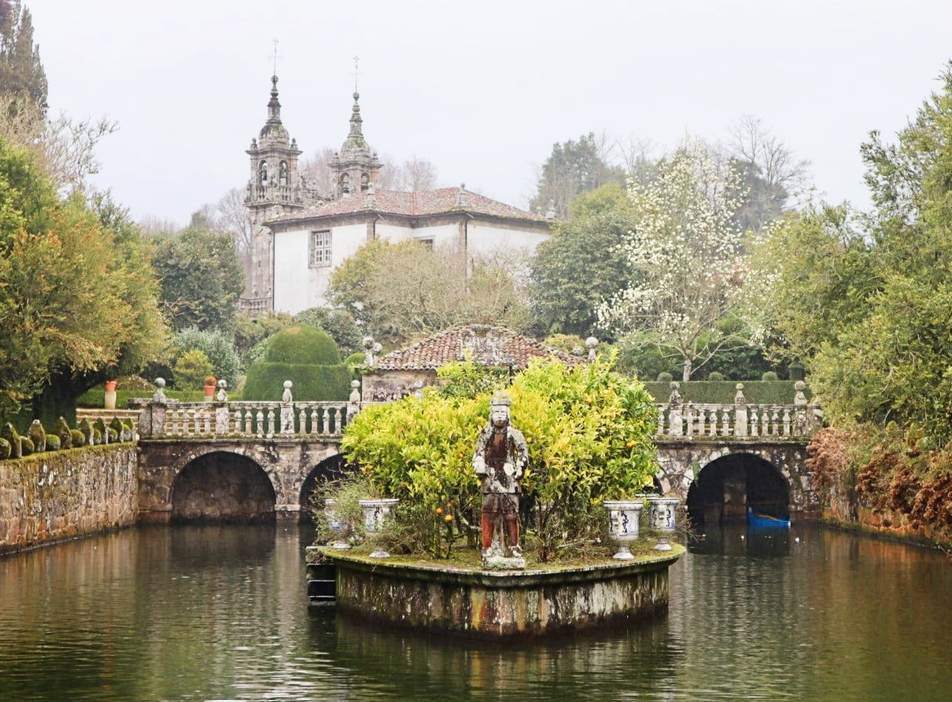
Here in Galicia, we see that same story every week. Not villages, usually — but pazos. Grand stone manor houses, some dating back to the 1500s and 1600s, built by noble families and merchants across the Galician countryside, many of them still standing exactly as they were built, waiting for someone to walk back through the door.
What It Feels Like to Own One
Picture it for a moment. You turn off a quiet country lane, through a stone archway worn smooth by four hundred years of hands. A gravel drive curls up past an old chestnut tree towards a façade of grey granite, with a coat of arms carved above the door — the mark of the family who built this place long before Spain was Spain as we know it today.
You let yourself in. The hallway is cool and dim, floored in the same stone as the walls outside. There is a smell that only very old buildings have — wood, stone, and centuries of woodsmoke from a fireplace that has been lit every winter since before anyone alive can remember. Upstairs, the bedrooms look out over your own land: perhaps an old horreo raised on stone legs, a walled garden gone slightly wild, a small private chapel where generations were baptised and buried.
This is not a renovation project you are imagining. This is a home with a past already written into it, one you are about to become part of. The beams over your head were cut from oak that grew on this land. The well in the courtyard has drawn water for four centuries of families before yours. When you close the front door at night, you are doing exactly what the owners of this house have done since long before your own country existed.
That is what it feels like to own a pazo.
We Know Where They Are
At GaliciaEstates, our work is finding these places — the pazos, the villas, and the exceptional new-build homes across Galicia — and matching them with owners who understand what they are looking at. Many of the properties we work with are not on the open market. Some have been in the same family for generations and are only now, quietly, being made available. Others need a sensitive hand to restore them, and we can guide that process from first viewing through to the finished home.
Galicia is one of the last corners of Spain where this is still possible. The coast to the south has been developed for decades, its old buildings long since converted or demolished. Here, in the green hills and river valleys of Galicia, centuries-old stone houses still stand in working order, in landscapes of vineyards, pine forest, and Atlantic coastline, at a fraction of what a comparable house would cost further south.
If a story like Salto de Castro has stirred something in you — the pull of an old building with real history behind it — we would love to show you what is available closer to home, in one of Spain's most beautiful and least discovered regions.
Source story: El Cronista, 16 September 2026