The Galician coast
The Galician Coast: A Thousand Shades of Blue
More than 1,500 kilometres of rías, headlands, hidden coves and open golden beaches — a coastline that rewards curiosity.
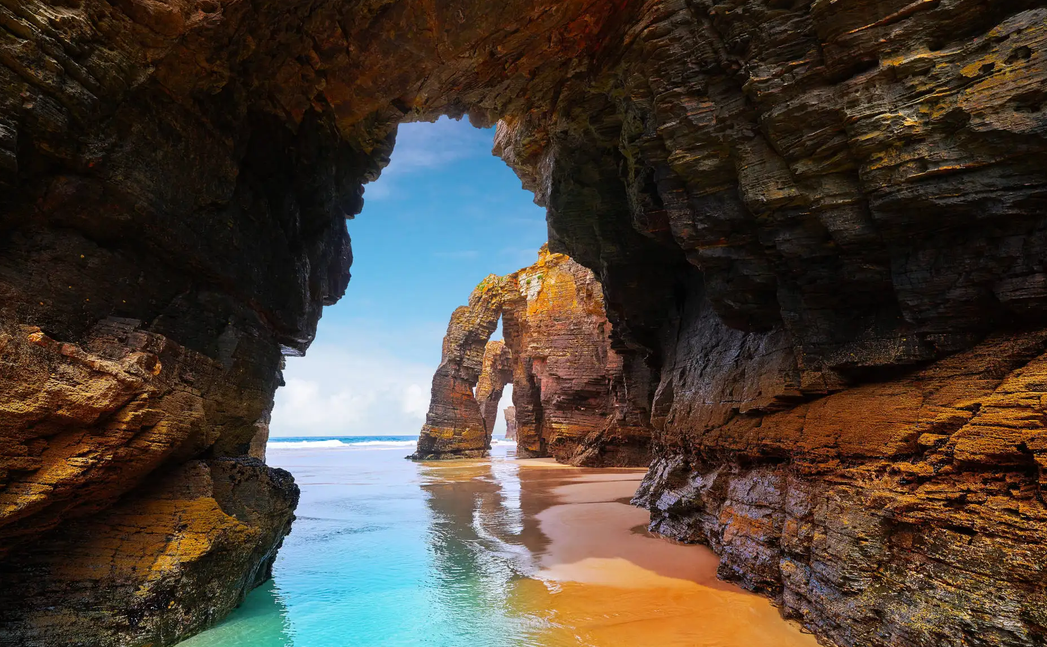
There's a particular kind of surprise that hits first-time visitors to Galicia. They arrive expecting the moody, rain-swept Atlantic edge of Spain — and instead find themselves standing over water so clear and so turquoise that it stops them mid-sentence. Galicia's coastline runs for well over 1,500 kilometres, carved into rías, headlands, hidden coves and open golden beaches, and no two stretches of it look quite the same. This is a coast that rewards curiosity: the further you wander from the famous names, the more it has to give.
Beyond the postcard: Praia das Catedrais
Any conversation about Galicia's coast eventually arrives at Praia das Catedrais in Ribadeo — the "Cathedrals Beach," named for the soaring rock arches and vaulted formations that the Atlantic has carved into its cliffs over thousands of years. At low tide, visitors can walk beneath these stone cathedrals, and it's easy to see why it's become one of the most photographed beaches in Spain. It's a genuinely spectacular sight, and worth the visit and the advance booking it now requires. But it's also just one page in a much longer, quieter story — and the rest of that story is where Galicia's coast really earns its reputation.
The "Caribbean of Galicia"
Locals have a habit of calling their favourite beaches "the Caribbean" of wherever they happen to be, and more often than not, they're not exaggerating. Praia de Rodas, on the protected Cíes Islands off Vigo, has been named among the best beaches in the world — fine white sand meeting water in shades of emerald and turquoise that genuinely rival the tropics, with the Atlantic's cooler temperature the only real giveaway. Access is limited to protect the islands, which only adds to the sense of having found something precious.
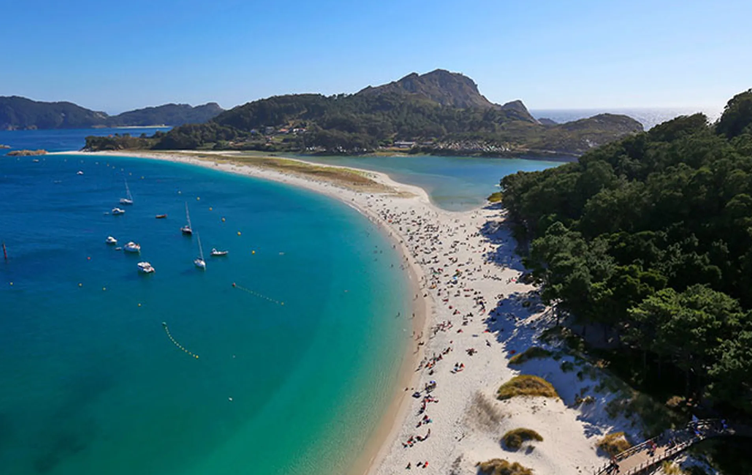
Far to the north, on the wilder Rías Altas, Praia de Vidreiro in O Vicedo carries its own "Caribe gallego" nickname — a quiet cove of pale turquoise water where an afternoon can pass without another soul in sight, framed by dense green headland rather than palm trees, but no less striking for it. These are the beaches that photographs struggle to do justice to, precisely because the colour of the water looks like it's been altered.
Little coves, hiding in plain sight
Some of the most memorable spots along this coast aren't marked on any beach guide — they're the kind of place a fisherman mentions, or a track through gorse and eucalyptus leads to almost by accident. The Ría de Aldán, south of Vigo, hides a string of small coves — Pipín, Cova da Balea, Sartaxens — reachable only on foot, shaded by trees that lean out over the sand. Further north, along the Costa da Morte, the golden sands of Beo near Malpica take on a wilder, more dramatic character, with rock formations and a swell that speaks to this coast's fiercer reputation. Near Fisterra, Mar de Fora offers something similar: a near-untouched cove with real Atlantic energy, a favourite of surfers and solitude-seekers alike.
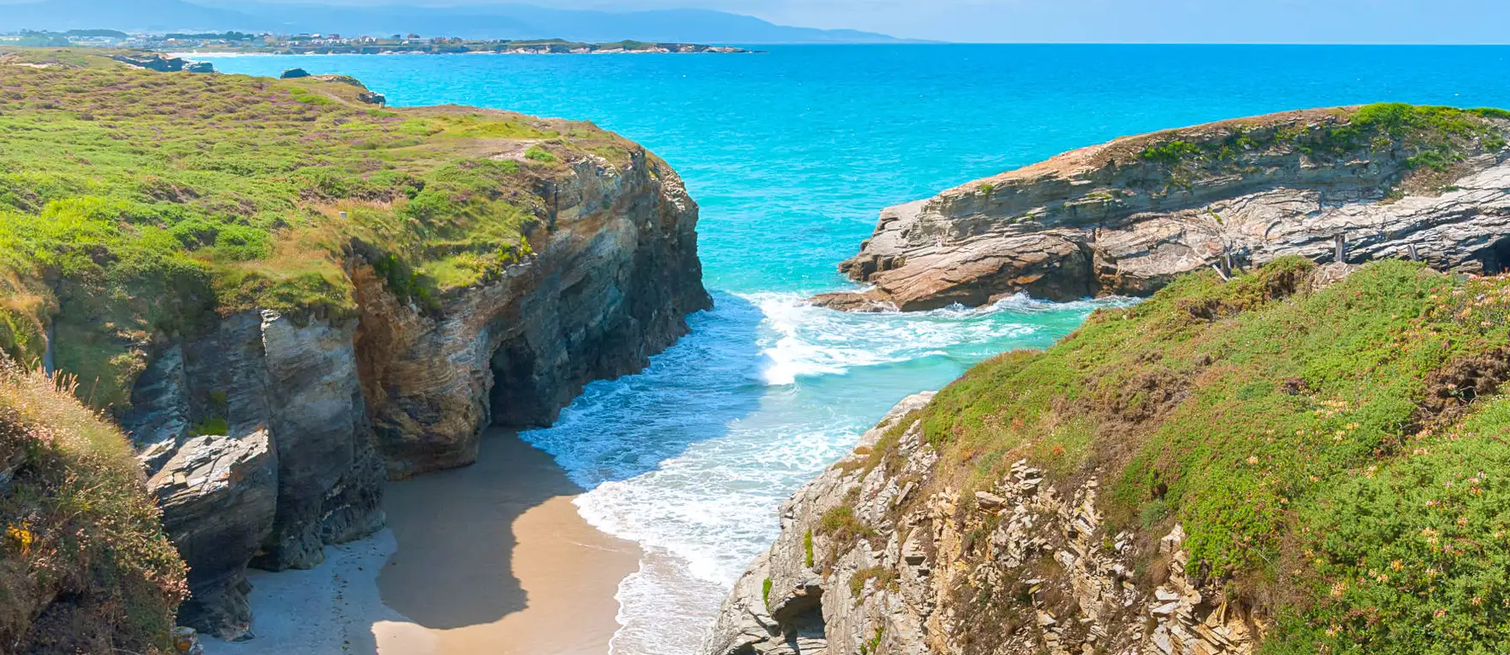
Closer to the Rías Baixas, the long crescent of Praia de Carnota — Galicia's longest beach at seven kilometres — backs onto dune fields and the granite bulk of Monte Pindo, while smaller gems like Praia de Menduíña near Cangas do Morrazo offer white sand and glassy, sheltered water within a short walk of the town.
A coast still being discovered
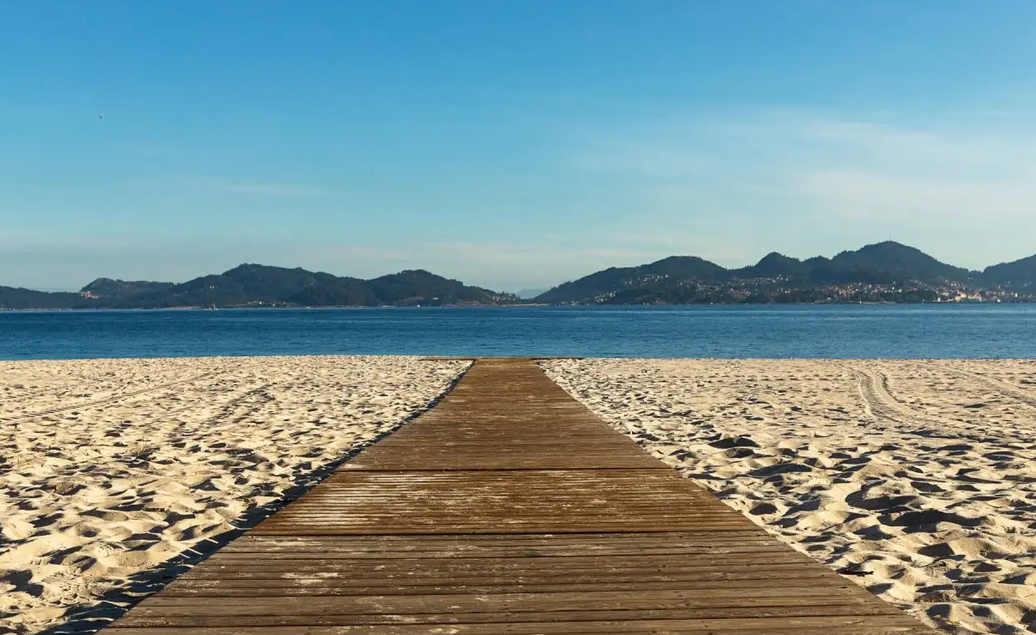
What ties all of this together isn't any single beach — it's the sense that Galicia's coastline still has corners left to find. A ría curls around a headland and suddenly there's a cove with nobody on it. A track through the gorse ends at a stretch of sand no wider than a garden. The scenery shifts constantly: sheer cliffs give way to sheltered estuaries, wild Atlantic swell softens into calm turquoise pools, dense Galician woodland runs almost to the waterline. It's a coast built for slow exploration rather than a single checklist stop — and for anyone considering a home here, that's precisely the point. The beach at the end of the road might be the famous one everybody's seen photographed, or it might be the quiet cove nobody's told you about yet.