The Camino de Santiago
Which Camino de Santiago Should You Walk? A Guide by Time Available, and a Lesser-Known Coastal Route
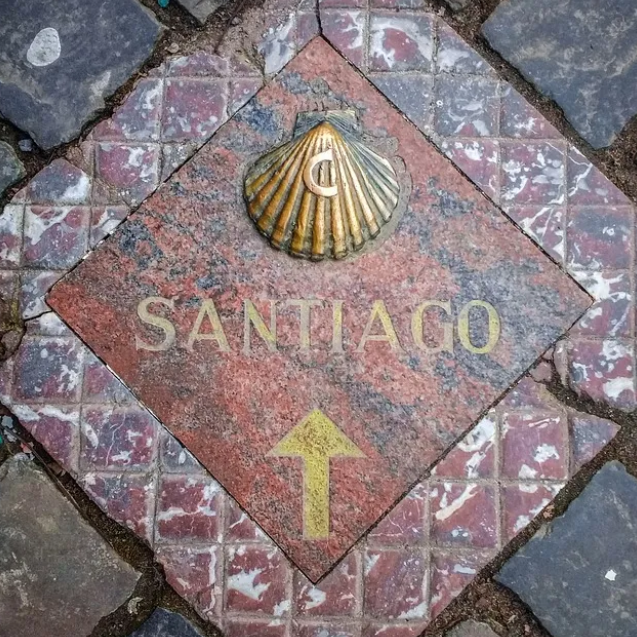
There is no single Camino de Santiago. There are many routes, and the right one depends on how many days you have. The key rule for the Compostela, the official certificate of completion, is that you must walk at least the last 100 km into Santiago. Stages typically run 20 to 25 km a day, so five days is enough for the minimum. More days let you start further back.
If you have 5 days
You'll walk the last 100 km or so, and there are plenty of ways to do it.
- Camino Francés from Sarria. The classic short option, usually done in five stages. It is by far the busiest route.
- Camino Portugués from Tui. Tui is the Galician border city on the River Miño, just across from Portugal. From here it is just under 120 km to Santiago, with mostly short stages of under 20 km through the province of Pontevedra.
- Camino Portugués along the coast from Vigo. A more recently recognised variant that follows the Galician shoreline to Santiago.
- Camino del Norte from Vilalba. Runs through inland Galicia and its small villages.
- Camino Primitivo from Lugo. Starts in the Roman walled city and covers a little over 100 km.
- Camino Inglés from Ferrol. 122 km, completed in five days.
- Others. The Camino de Invierno from Monforte de Lemos, and the Camino Sanabrés from Ourense (124 km). You can also walk from Santiago to the Atlantic coast at Finisterre in four stages, which earns a separate certificate called the Fisterrana.
If you have 10 days
Ten days lets you start outside Galicia.
- Camino Francés from Ponferrada. About 200 km, through the Ancares mountains and past O Cebreiro.
- Camino de Invierno from Ponferrada. About 50 km longer, but it passes Las Médulas and the Ribeira Sacra wine country. It is also a good summer alternative for avoiding the crowds on the last stages of the Francés.
- Camino Portugués from Porto. Choose the inland or coastal variant. That gives you roughly five days in Portugal and five in Galicia.
- Camino del Norte from Luarca. Green landscapes near the northern coast, passing through Ribadeo, close to the famous Playa de las Catedrales.
- Camino Primitivo from Oviedo. The full route, though the stretch to Lugo is mountainous.
- Camino Sanabrés from Puebla de Sanabria. Covers nearly half of this route.
If you have 14 days
- Camino Francés from León. Over 300 km. León is the second most popular starting point after Sarria.
- Camino Portugués from Águeda, the Portuguese town known for its colourful umbrellas.
- Camino del Norte from Gijón, leaving the industrial edge behind for green coastal scenery.
- Camino Sanabrés (the Mozárabe) from Granja de Moreruela. Fifteen stages, entering Galicia at A Gudiña, where you choose the shorter route via Laza or the longer one via Verín.
Beyond the official routes
The routes above are all recognised Caminos. Galicia also has quieter, lesser-known routes. The best known is the Camino del Mar, a coastal alternative for anyone who wants sea views and far fewer fellow walkers.
Camino del Mar
At Ribadeo, the Camino del Norte splits in two. One branch heads inland towards Mondoñedo, and the other, the Camino del Mar, follows the north coast of Lugo province. It passes through Foz, Burela, Viveiro, Ortigueira and Cedeira and continues to Neda near Ferrol, where it joins the Camino Inglés for the final stretch to Santiago.
- Distance: roughly 190 km from Ribadeo to Neda, in about eight stages, and about 280 km in total to Santiago. Figures vary a little between sources.
- Highlights: clifftop paths, long beaches and fishing villages. You also pass the Basilica of San Martiño near Foz and San Andrés de Teixido, one of Galicia's most important pilgrimage sites.
- Character: quiet. Pilgrims from 26 countries walked it last year, but it is still far from crowded.
- Practicalities: proper Camino infrastructure and signposting have been slower to arrive than on the main routes. Expect yellow spray-painted arrows in places, and check current conditions before you go.
Is it an official Camino yet?
The answer is that it depends who you ask.
- The Cathedral of Santiago recognised it in June 2021. The Cathedral chapter, which issues the Compostela, accepted the route, so pilgrims who arrive via the Camino del Mar can receive their certificate. Its supporters had spent about 20 years researching the route's history.
- The Galician government (the Xunta) has not yet made it an official Camino. Under Galician heritage law, a route needs documented evidence of its history as a pilgrimage route. The Xunta agreed in 2021 to assess the Camino del Mar and several other candidates, and the regional parliament had earlier asked for it to be approved. As of March 2026, local press was still describing a long wait.
- A new category is now on the table. In December 2025, the Xunta announced a new status called "cultural itinerary of regional interest", for routes that don't meet the full Camino de Santiago criteria but deserve special attention from the authorities. The Camino del Mar is one of the first eight candidates for recognition in 2026, and the new status would open the way to grants and promotion. A decree will set the exact criteria. This is a different, lesser status than becoming an official Camino.
At the time of writing we found no announcement that the designation has been granted, so watch this space.
The other candidates
The same list of eight includes A Geira (Os Arrieiros), Muxía by Brandomil, Mariñán, Miñoto Ribeiro, Muros-Noia, San Rosendo and the Vía Künig. Together they cross all four Galician provinces, and some link up with Portugal or León. There is also the Ruta del Mar de Arousa e Río Ulla, which the Xunta already lists alongside its official routes.
Choosing your route
- Five days or fewer: Sarria for tradition, Tui or Vigo for coastal walking and short stages, or Lugo and Vilalba for something quieter.
- Ten days: Ponferrada or Porto for the classic experience, or the Camino de Invierno if you want to avoid crowds.
- Two weeks or more: León on the Francés, or one of the longer Portuguese and northern coastal routes.
- Want to go off the beaten track: the Camino del Mar, especially in the shoulder seasons.
Whichever route you choose, Galicia rewards slow travel. Many of the region's pazos, villages and coastal towns sit right along the Camino. If walking it makes you want to stay, the Galicia Estates team would be glad to help.
Sources: Hosteltur, "Qué Camino de Santiago hacer según tu tiempo" (18 September 2026); Alfa y Omega (June 2021, Cabildo recognition); Xunta de Galicia and Consellería de Cultura releases (December 2025); El Progreso (December 2025 and March 2026); El Correo Gallego (May 2025); caminodelmar.es; Cultura de Galicia.